








































































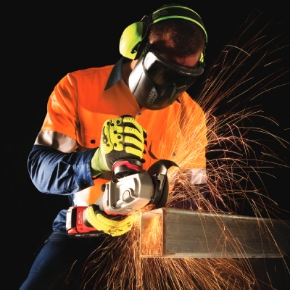

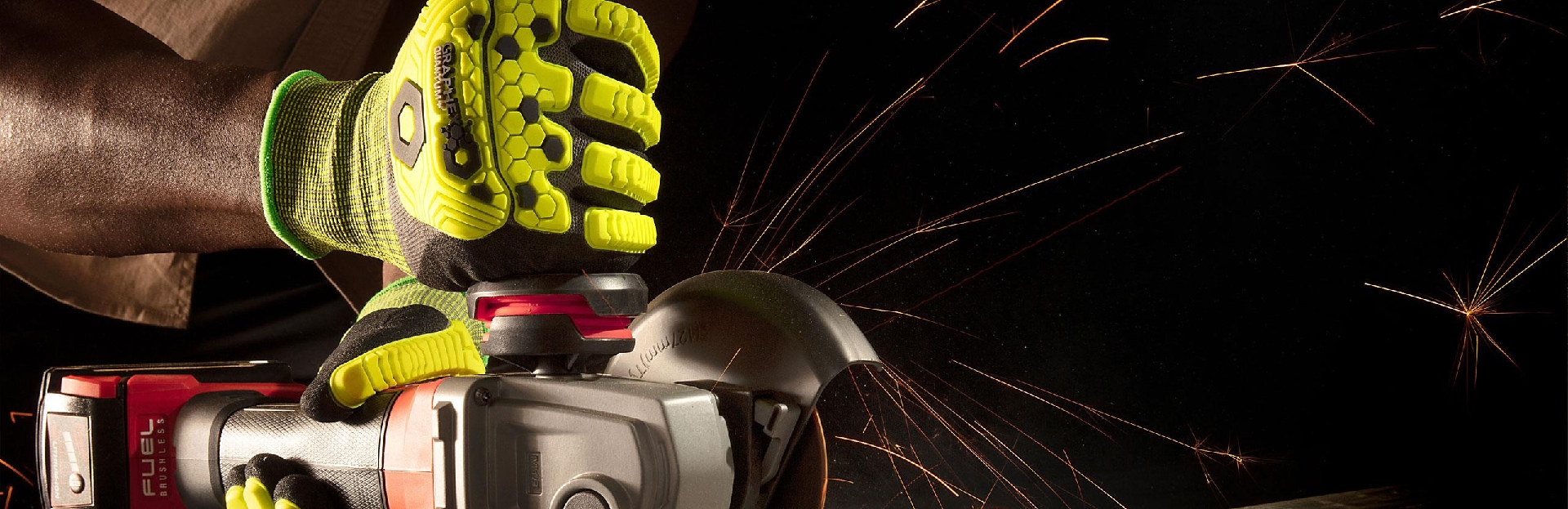
In heavy-duty sectors like civil construction, engineering, mining, and heavy manufacturing, winter presents a unique operational challenge that goes far beyond personal comfort. Under the Australian Work Health and Safety (WHS) Act, Person Conducting a Business or Undertaking (PCBU) entities hold a non-negotiable duty of care to provide PPE that is entirely fit for purpose. When it comes to winter hand protection, simply hand-delivering basic insulated retail gloves or unrated liners is a direct compliance risk.
When core body heat drops, the human nervous system prioritizes vital organs, reducing blood flow to the hands and fingers. This physiological reaction causes immediate loss of dexterity, a dramatic drop in grip strength, and an increased risk of musculoskeletal strains and dropped-tool incidents. To keep your crews safe and productive, procurement must look past the "warmth" of a fabric and closely examine certified performance ratings.
Deconstructing the Standard: AS/NZS 2161.5 (EN 511)
In Australia, industrial gloves certified for cold environments carry the AS/NZS 2161.5:1998 standard (identical to the European EN 511 standard). Look for the specialized cold hazard shield icon stamped on your glove's cuff. It is accompanied by a three-digit performance rating that tells you exactly how the glove will perform under real-world winter conditions:
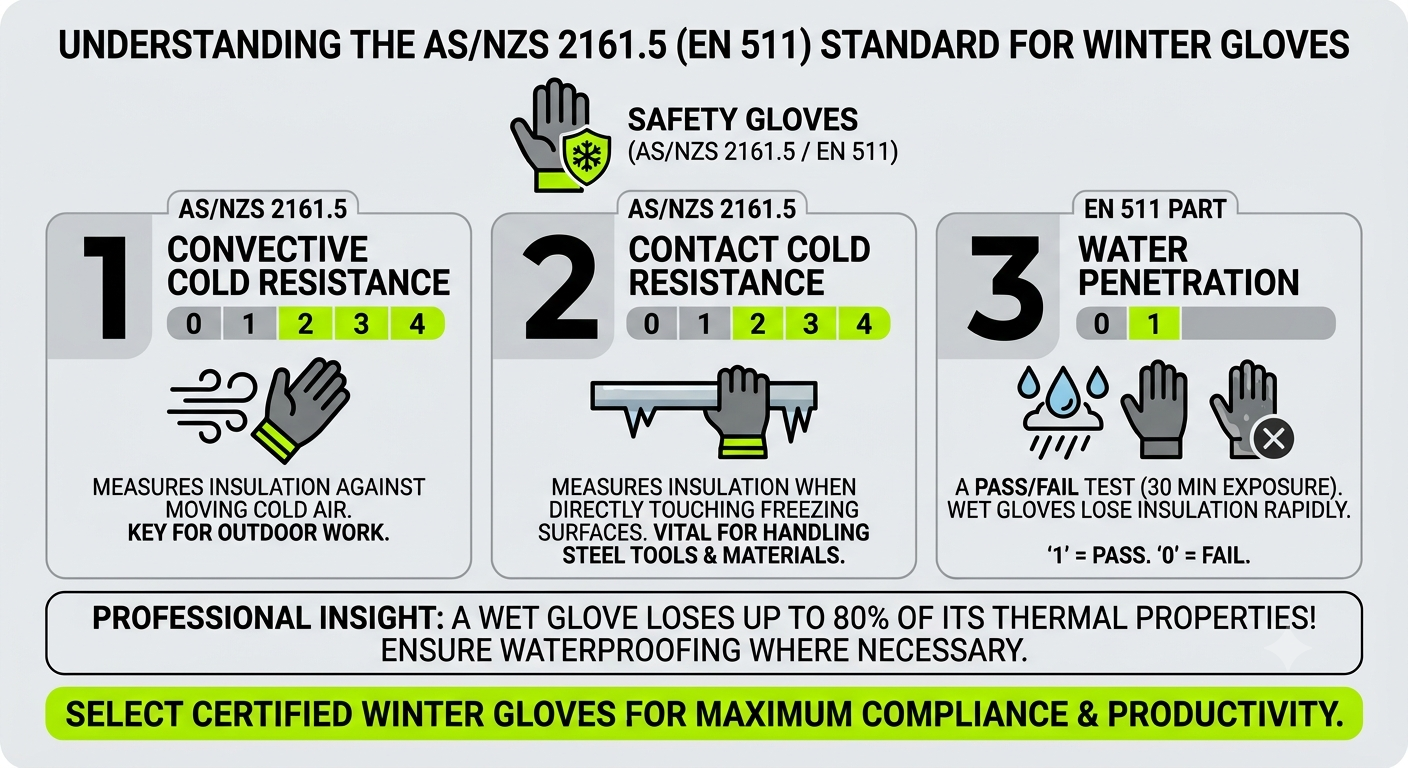
1. Convective Cold Resistance (Rated 0 to 4)
This rating measures the glove’s capacity to insulate your hands against moving cold air. A higher level means superior thermal performance against biting winter winds during outdoor, exposed civil or structural operations.
2. Contact Cold Resistance (Rated 0 to 4)
This is the most critical metric for tradesmen handling steel, concrete, or raw materials stored outdoors overnight. It quantifies how long the glove material can prevent thermal transfer when directly touching a freezing metal surface or handling power tools.
3. Water Penetration (Rated 0 or 1)
A binary pass/fail test. If a glove fabric allows water to seep through after 30 minutes of continuous exposure, it is rated 0. If it remains completely impermeable, it earns a 1.
Critical Safety Risk: A wet glove loses up to 80% of its insulation value. If your crew is working in outdoor winter rain with a glove rated '0' for water penetration, their risk of rapid grip loss and hand injuries multiplies exponentially.
The Mechanical Balance: AS/NZS 2161.3 (EN 388)
Cold protection cannot come at the expense of structural toughness. Under AS/NZS 2161.3:2020, an approved winter glove must also prove a baseline mechanical performance, specifically achieving at least Level 1 for abrasion and tear resistance. True site-ready winter gloves feature reinforced palm overlays and thumb crotches to withstand heavy handling while keeping the thermal barrier intact.
The Sizing & Productivity Matrix
One of the most frequent errors observed by safety supervisors is sizing up winter gloves to force a second cotton liner underneath. This approach creates excess material at the fingertips, leading to a dangerous "dexterity gap." Workers lose fine tactile feel and are highly likely to take the gloves off to start a nut, adjust a machine setting, or operate digital panels. The moment a glove is removed on a freezing site, the risk of crush, cut, or puncture injury spikes.
Select high-performance winter work gloves designed with integrated, low-bulk thermal insulation linings that match the true hand size of your operators. True safety is engineered, not guessed.
If your business is reviewing winter PPE or glove compliance across site teams, our team can help you assess the right hand protection for your work environment, tasks and seasonal conditions. Purchase with confidence with Safetywear Direrct Australia.

